What is AI and Why Should You Learn How to Use It? (2026)
Artificial Intelligence (AI) is a field of computer science that develops systems capable of performing tasks typically requiring human intelligence, such as reasoning, learning, and creative problem-solving. By simulating human cognitive functions, AI processes vast amounts of data to provide insights, automate workflows, and enhance personal productivity.
What is AI and how does it actually work?
To understand Artificial Intelligence, it is best to view it not as a sentient "brain" in a box, but as a highly sophisticated pattern-recognition engine. At its core, AI uses mathematics and statistics to analyze data, find relationships within that data, and make predictions or generate new content based on those patterns. Unlike traditional computer software, which follows a rigid set of "if-then" rules written by a human programmer, AI "learns" from examples.
When you interact with a modern AI system, such as a Large Language Model (LLM), you are engaging with a network that has been trained on trillions of words from books, articles, and websites. This training allows the AI to understand the context of a question and predict the most logical next word in a sentence, resulting in human-like conversation. This process is known as Machine Learning (ML), a subset of AI that focuses on the idea that systems can learn from data, identify patterns, and make decisions with minimal human intervention.
Learning how to use AI starts with understanding this fundamental shift: you are no longer just giving a computer commands; you are collaborating with a system that can interpret intent. This makes AI uniquely flexible, allowing it to assist with everything from writing emails to diagnosing complex technical issues. As we move deeper into 2026, the ability to communicate effectively with these systems—often called "prompt engineering"—has become a foundational skill for the modern workforce.
Understanding the types of Artificial Intelligence
Not all AI is created equal, and for a beginner, it is helpful to categorize the technology into three main stages. This helps clarify where we are today and where we are heading. First, there is Narrow AI (ANI) . This is the AI we use every day. It is designed to perform a specific task, such as facial recognition, recommending a movie on Netflix, or driving a car. While it can be incredibly powerful at that one task, it cannot do anything else.
Next is Generative AI , which is a specialized form of Narrow AI that has taken the world by storm. These systems don’t just analyze data; they create new content, including text, images, music, and even computer code. This is the version of AI that most people are referring to when they talk about "using AI" in their daily work or creative projects.
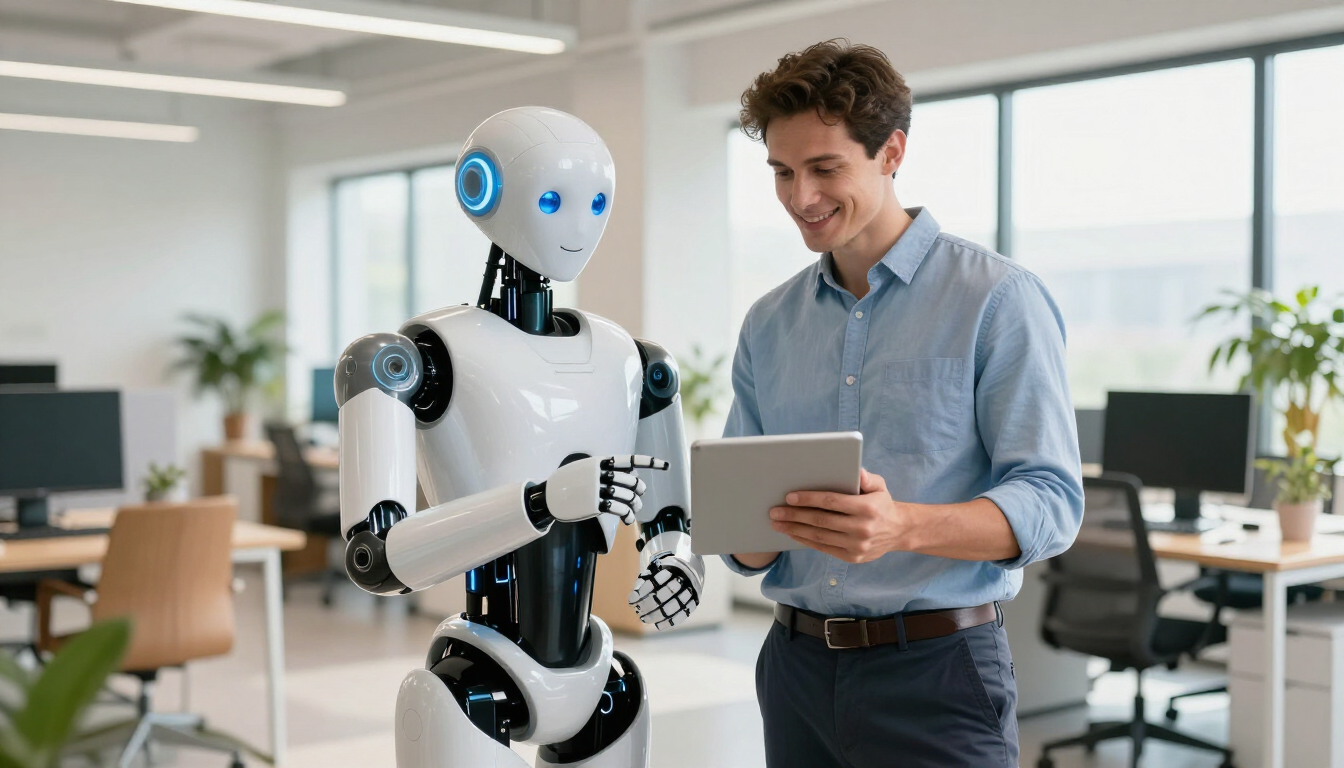
Finally, there is Artificial General Intelligence (AGI) . This remains a theoretical concept where a machine could perform any intellectual task that a human can do. While we aren't there yet, the rapid advancement of Generative AI is bringing us closer to systems that can handle a wide variety of complex, multi-step projects autonomously. For anyone brand new to the field, focusing on Generative AI is the most practical way to start seeing immediate benefits in your life and career.
Why is learning AI important for your career in 2026?
The professional landscape has shifted dramatically. AI is no longer a niche tool for data scientists; it is a general-purpose technology, much like the internet or electricity. Knowing how to use AI is becoming a prerequisite for almost every office-based role. Organizations are looking for individuals who can leverage these tools to drive efficiency and innovation. At Ask Phileo , we focus on helping people bridge this gap through practical education.
Here are five reasons why AI literacy is essential for your career:
- Competitive Advantage : As more companies adopt AI, those who can navigate these tools will stand out in the job market.
- Efficiency : AI can handle the "busy work," allowing you to focus on high-level strategy and creative thinking.
- Decision Support : AI can analyze trends and summarize long documents, helping you make better decisions faster.
- Technical Empowerment : AI can write code or build spreadsheets, allowing non-technical employees to perform technical tasks.
- Future-Proofing : Understanding AI now ensures you won't be left behind as the technology becomes more integrated into every industry.
In many ways, AI acts as a "force multiplier." If you are a writer, AI doesn't replace you; it becomes your tireless research assistant and editor. If you are a manager, it becomes your data analyst. By embracing these tools, you are not just keeping up; you are gaining a superpower that allows you to produce higher-quality work in a fraction of the time.
How can AI improve your daily productivity?
One of the biggest reasons to learn AI is the immediate impact it has on your personal and professional productivity. Most people spend hours every week on repetitive tasks that don't actually require their unique human talents. AI excels at these tasks. Imagine a workday where your first draft of a report is ready in seconds, or your inbox is automatically organized by priority.
Consider these practical applications for AI in your daily routine:
- Summarization : Paste a long transcript or a 50-page PDF into an AI tool and ask for a 5-bullet summary of the key takeaways.
- Drafting and Brainstorming : Use AI to overcome "blank page syndrome" by asking it to generate ten ideas for a project or draft an initial outline for a presentation.
- Language and Tone Adjustment : Ask an AI to rewrite a casual email to be more professional, or to simplify complex technical jargon for a general audience.
- Workflow Automation : Integrate AI into your calendar to find the best times for meetings or to automate data entry between different software platforms.
- Skill Acquisition : Use AI as a personalized tutor to explain difficult concepts or to help you learn a new language or software program.
By offloading these tasks to an AI, you reclaim time for deep work—the kind of work that truly moves the needle for your business or personal growth. This is the core philosophy behind the strategies shared on our Blog , where we dive deeper into specific workflow improvements.
Common AI myths vs. reality
There is a lot of misinformation surrounding Artificial Intelligence, which can cause unnecessary fear or unrealistic expectations. To use AI effectively, you must separate fact from fiction. One common myth is that AI is "thinking" or "conscious." In reality, it is performing complex calculations. It doesn't have feelings, beliefs, or a sense of morality. It simply follows the statistical probabilities it learned during training.
Another myth is that AI is always right. This is a dangerous assumption. AI can "hallucinate," which means it can confidently present false information as fact. This is why human oversight remains critical. You should view AI as a junior assistant—it is very fast and helpful, but you must check its work before hitting "send." Understanding this limitation is a key part of AI literacy.
Finally, many people fear that AI will take all the jobs. While AI will certainly change how we work, history shows that major technological shifts usually create more opportunities than they destroy. The people who are most at risk are not those replaced by AI, but those who refuse to learn how to work alongside it. By learning AI today, you are positioning yourself as a collaborator with the technology rather than a victim of it.
Practical AI tools for beginners to try first
If you are ready to start, you don't need to be a computer scientist. There are several user-friendly tools that serve as excellent entry points. Most offer free versions that are more than capable of handling basic tasks. Starting with these will give you a feel for how to communicate with AI and what kind of results to expect.

We recommend beginning with a few key categories of tools:
- Chatbots (LLMs) : ChatGPT (OpenAI), Claude (Anthropic), and Gemini (Google) are the industry leaders for text-based tasks, coding, and general assistance.
- Visual Creators : Midjourney and DALL-E are perfect for generating high-quality images from simple text descriptions.
- Research Assistants : Perplexity AI is fantastic for searching the web and getting cited, accurate answers to complex questions.
- Note-Takers : Tools like Otter.ai or Fireflies can record your meetings and provide an automated summary and action-item list.
Experimenting with these tools for just 15 minutes a day can rapidly build your confidence. Try asking a chatbot to help you plan a weekly meal schedule or to explain a complex news story. The more you play with the technology, the more you will discover unique ways it can serve your specific needs.
How to start your AI learning journey today?
The best way to learn AI is by doing. You don't need to read a textbook; you need to start solving small problems. Begin by identifying one task you do every day that feels tedious. Maybe it’s writing LinkedIn posts, responding to customer inquiries, or analyzing a small spreadsheet. Commit to using an AI tool to help you with that one task for a week.
As you gain experience, you will notice that the quality of the AI's output depends heavily on the quality of your input. This is the art of prompting. A good prompt provides context, specifies the persona the AI should adopt, and clearly defines the desired output format. For example, instead of saying "write a post about AI," try saying "Act as an AI consultant. Write a 200-word LinkedIn post for beginners explaining the benefits of automation. Use a conversational tone and include three bullet points."
Education is also key. Stay curious and keep up with new developments, as the field moves incredibly fast. Seeking out neutral, practical guidance can save you months of trial and error. Organizations like Ask Phileo provide tailored briefings and training designed to turn AI from a confusing concept into a practical asset for your specific goals.
Summary and Key Takeaways
Artificial Intelligence is a transformative tool designed to augment human capability, not replace it. By learning to use AI, you can drastically increase your productivity, stay competitive in a changing job market, and automate the mundane aspects of your daily life. Whether you are using it to draft emails, summarize long reports, or brainstorm creative ideas, the key is to start small and remain a critical thinker. Remember, AI is a powerful assistant, but you are the director.
Key Takeaways:
- AI is a pattern-recognition engine that learns from data to assist with complex tasks.
- Learning AI provides a significant competitive advantage and protects your career from obsolescence.
- Human oversight is essential to catch "hallucinations" and ensure accuracy.
- Start with accessible tools like ChatGPT or Claude to build your skills through daily practice.
- Focus on "prompting" as a core new skill to get the best results from AI systems.
For more guides on adopting new technology responsibly, please review our Privacy Policy to see how we handle data and information in the age of AI.
Recent Posts